
How AI is Changing Web Design in India in 2026
Introduction
Artificial intelligence has moved far beyond being a trendy buzzword in India’s digital industry. In 2026, it has become a practical and powerful tool that is transforming the way websites are planned, designed, and developed. From generating wireframes in seconds to writing code and optimizing user experiences, AI is now a core part of modern web design workflows. This shift clearly shows how AI is changing web design in India in 2026, helping agencies, freelancers, and businesses create better websites faster than ever before.
Indian web designers are no longer spending countless hours on repetitive tasks such as layout creation, content suggestions, image optimization, and A/B testing. Instead, AI-powered tools are automating these processes, allowing designers to focus on creativity, branding, and strategic decision-making. Whether it is a startup in Bengaluru, an eCommerce brand in Mumbai, or a local business in Kerala, companies across India are adopting AI to reduce costs and improve website performance.
The impact of AI on web design is especially significant in India, where businesses are increasingly looking for affordable and high-converting websites. AI website builders, smart UX tools, and automated coding assistants are making professional web design more accessible to businesses of all sizes. This is one of the biggest AI web design trends in India 2026, and it is reshaping the expectations clients have from web designers.
Understanding how AI is changing web design in India in 2026 is essential for anyone involved in digital marketing, development, or design. In this blog, we will explore the latest tools, trends, and opportunities that are defining the future of AI-powered web design in India.
AI-Powered Design Tools Transforming Indian Workflows
One of the clearest examples of how AI is changing web design in India in 2026 is the rapid adoption of AI-powered design tools such as Figma. What began as a helpful feature has now become an essential part of the workflow for Indian web designers, agencies, and freelancers. Figma AI can generate layout suggestions, populate designs with realistic content, summarize client feedback, and create interactive prototypes from simple text prompts.
For Indian freelance designers and small agencies working under tight deadlines, these capabilities have significantly reduced the time spent on wireframing and low-fidelity prototyping. Tasks that once took several hours can now be completed in minutes, allowing designers to present polished concepts to clients much faster. This speed is especially valuable in India’s competitive web design market, where businesses expect quick turnarounds without compromising quality.
The growing use of AI-powered tools highlights exactly how AI is changing web design in India in 2026. By automating repetitive design tasks, AI enables professionals to focus on creativity, branding, and user experience. As a result, Indian designers can deliver smarter, faster, and more cost-effective websites for businesses of all sizes.
Generative AI for Visual Content: Democratising Quality
One of the most exciting examples of how AI is changing web design in India in 2026 is the way generative AI tools are transforming visual content creation. Just a few years ago, Indian small businesses and startups often had to rely on generic stock photos or invest heavily in custom illustrations to build a professional-looking website. For many businesses in cities like Coimbatore, Visakhapatnam, Kochi, and Jaipur, high-quality visual design was simply too expensive.
In 2026, this has changed dramatically. Tools like Adobe Firefly, Midjourney, and Canva now allow designers and business owners to generate unique illustrations, banners, icons, and background images in just a few minutes. This shift is a major reason how AI is changing web design in India in 2026 has become such an important topic for agencies and entrepreneurs alike.
For Indian SMEs and startups, generative AI has significantly reduced the cost of creating premium visual assets. Businesses no longer need large design budgets to produce attractive websites that reflect their brand identity. Designers can quickly test multiple creative directions and customize visuals for industries ranging from healthcare and education to eCommerce and real estate.
However, access to visuals is no longer the main challenge. The real value lies in selecting the right images and maintaining brand consistency across the website. This is where skilled designers remain essential. While AI can generate visuals instantly, human creativity ensures that those visuals support a cohesive, trustworthy, and conversion-focused user experience.
AI Copywriting and Content Assistance for Web Pages
Website copy headlines, product descriptions, about pages, call-to-action text has historically been one of the most neglected aspects of Indian SME websites. Business owners either wrote it themselves with mixed results or paid separately for a copywriter. In 2026, AI writing tools integrated directly into website builders and CMS platforms allow designers to draft and iterate website copy alongside visual layouts. Indian web designers are increasingly offering “AI-assisted content” as part of their service packages, adding significant value to projects that would previously have required a separate content team.
Important Distinction: AI-generated content and visuals require skilled human curation and customisation to be effective. The biggest risk for Indian businesses in 2026 is publishing AI-generated website content that is generic, factually imprecise, or inconsistent with their brand voice. Working with an experienced web designer who uses AI as a tool not a replacement for judgement is the key differentiator.
AI-Driven Personalisation and Conversion Optimisation
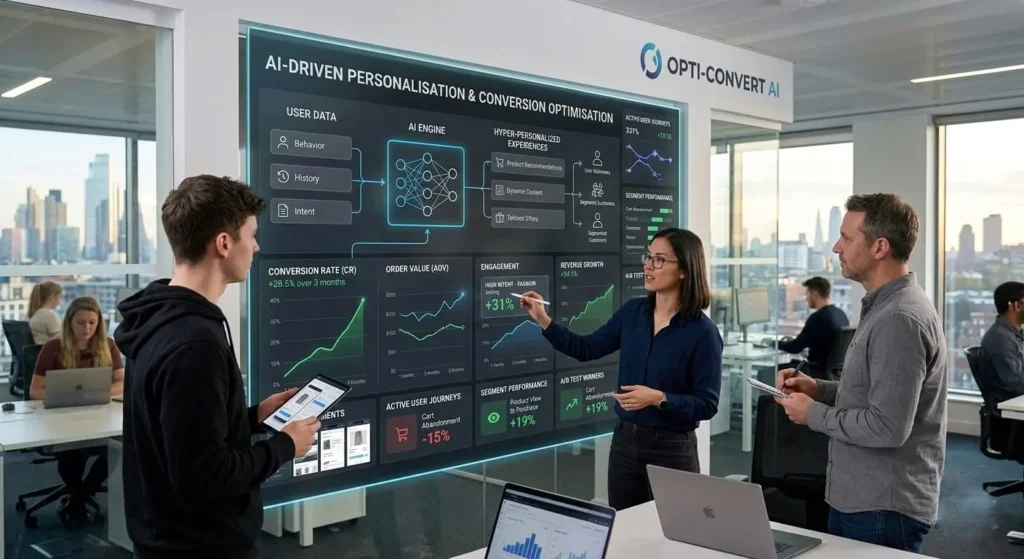
A major example of how AI is changing web design in India in 2026 is the rise of AI-driven personalisation and conversion optimisation. Modern websites are no longer static pages that show the same content to every visitor. Instead, AI helps websites adapt in real time based on user behaviour, preferences, and browsing patterns. This allows Indian businesses to create more relevant experiences that lead to higher engagement and better conversion rates.
For Indian eCommerce stores, SaaS companies, and lead-generation websites, AI-powered tools are now available at affordable price points. Platforms such as VWO, which was founded in India, and Hotjar offer AI-assisted A/B testing, heatmap analysis, and behavioural insights. These tools can identify which headlines, layouts, and calls to action perform best and automatically recommend improvements.
This is a practical demonstration of how AI is changing web design in India in 2026. Instead of relying on assumptions, designers and marketers can use AI to make data-driven decisions. Websites can display personalised content based on a visitor’s location, device, traffic source, or past interactions. For example, a SaaS website may show different messaging to first-time visitors and returning users, while an eCommerce store can highlight products based on browsing history.
Indian businesses using AI-driven optimisation tools are seeing measurable increases in enquiries, free trials, and sales without increasing their advertising budgets. By turning existing traffic into more conversions, AI is helping businesses achieve better ROI and proving that intelligent web design is now a competitive advantage in the Indian market.
AI in Code: Faster Development for Indian Web Teams
One of the most practical examples of how AI is changing web design in India in 2026 is the impact of AI coding assistants on website development. While design tools help create layouts and visuals, AI-powered coding tools are transforming how quickly those designs become fully functional websites. For Indian developers, freelancers, and small agencies, this means faster delivery, fewer errors, and more advanced features at lower costs.
Tools like GitHub Copilot and Cursor are now widely used across India’s web development industry. These platforms can generate code snippets, suggest improvements, detect bugs, and explain complex logic in real time. Developers can describe a feature in plain English and receive working code for responsive layouts, forms, animations, and integrations.
This shift highlights exactly how AI is changing web design in India in 2026. Tasks that once required extensive manual coding can now be completed much faster. Solo freelancers can build websites with features that previously demanded senior developer expertise, while small teams can handle more projects without increasing staffing costs.
For clients, the benefits are significant. Businesses can now afford sophisticated website functionality such as interactive dashboards, custom contact forms, API integrations, and dynamic content within mid-range budgets. Development timelines are shorter, maintenance is easier, and the final product is often more reliable.
By accelerating coding workflows and reducing technical barriers, AI is making high-quality web development more accessible across India. This allows designers and developers to focus on innovation and user experience rather than repetitive coding tasks.
FAQ
Is AI replacing web designers ?
No. AI is changing what web designers do, not replacing them. In 2026, Indian web designers who use AI tools effectively deliver faster, higher-quality work than those who don’t. Creative strategy, client relationships, brand thinking, and UX judgement remain deeply human skills that AI cannot replicate.
What are the best AI tools for web design in India in 2026?
The most widely used AI tools among Indian web designers in 2026 include Figma AI (for layout and prototyping), Adobe Firefly (for image generation), GitHub Copilot (for development), Framer AI (for website building), and various Claude/ChatGPT integrations for content drafting and UX writing.
Can AI tools help Indian small businesses build websites cheaply?
AI-assisted website builders like Framer, Durable, and Wix ADI can help small businesses create basic web presences faster and more affordably. However, for businesses that need strong SEO, custom brand experiences, and conversion-optimised design, partnering with a professional web designer who uses AI effectively will deliver significantly better long-term results.
Conclusion
Artificial intelligence is redefining the future of digital experiences, and there is no better example than how AI is changing web design in India in 2026. What began as a set of experimental tools has now become a practical advantage for Indian designers, developers, agencies, and businesses. From generating layouts and visual assets to writing code and personalising user experiences, AI is helping teams create smarter websites in less time and at lower cost.
For Indian businesses, this shift represents a major opportunity. Companies no longer need enterprise-level budgets to build high-quality websites that look professional, load quickly, and convert visitors into customers. AI-powered tools make advanced design capabilities accessible to startups, SMEs, and growing brands across India. This is why understanding how AI is changing web design in India in 2026 is essential for anyone planning to invest in a new website.
At the same time, AI does not replace the strategic thinking, creativity, and user-focused decision-making that experienced designers bring to a project. The most successful websites combine the speed and efficiency of AI with human expertise in branding, UX, and conversion optimisation.
For web design agencies in India, AI is best used as a way to enhance quality rather than cut corners. When integrated thoughtfully, it allows teams to deliver faster turnaround times, stronger visual design, and better business results.
As AI continues to evolve, the businesses that embrace these tools early will gain a significant competitive advantage. The future of web design in India is not just automated; it is more intelligent, more accessible, and more effective than ever before.
Pingback: Impact of Artificial Intelligence on Digital Marketing -2026